Flex Circuits
The phrase “bend it and they will break” may apply to some of the materials used in flexible circuits, but that’s not how they are made. Flex circuits are etched on an incredibly thin base film of polyester or polyimide—films that can be only 12-120 microns thick—with conductor material traces etched on one side of the circuit and a protective coverlayer on either side.
Flex circuits are designed to withstand bending and folding—in some cases, millions of flexural cycles—over the lifetime of the product. They are often the only practical choice when a product design requires dynamic flexing.
Compared to a traditional wire harness and ribbon connectors, a flex circuit can reduce assembly costs by eliminating the need to color code and wrap bundles of round wire and reducing human error during production. The fact that a flex circuit only routes to points necessitated by the plan design also reduces assembly time and costs.
In addition, flex circuits can save weight by removing the bulk and weight of bundled wires. This reduction in both physical size and weight also improves product aesthetics, which can have a powerful impact on customer confidence and purchase decisions. For example, when a cauterizing tool was redesigned with a sleek polyimide flex circuit to replace the bundle of round wires previously used, patients reported greater confidence in the procedure.
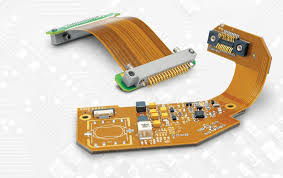
Advantages of Flex Circuits
The metallization of a flex circuit is typically copper foil—rolled or electroplated to achieve the desired level of performance. Copper foil is available in a wide range of thicknesses and surface treatments, allowing for the flexibility needed in a flex circuit while still maintaining good connectivity.
Multilayer flex circuits can address a variety of design challenges, including specified impedance requirements, elimination of crosstalk, extreme component density, shielding inadequacies and unavoidable crossovers. They can also accommodate a high-density of connections and provide better heat dissipation than ribbon cables.
Flex circuits are extremely versatile and can be bent and folded to assume complex three-dimensional shapes. This enables them to connect components and electronic devices where rigid boards or wire cables cannot. They can also be interfaced with rigid boards without the need for external bulky connectors, or they can be built as an integral part of a rigid board, eliminating all external connections.
A flexible circuit can also be configured with branches to multiple connectors, enabling an engineer to create a more compact, lightweight, and more robust product. In addition, a flex circuit can be fabricated in the shape of a loop to accommodate a connector that is not compatible with a circular design.