Flex PCB Manufacturer Be Used in Robotics and Automation
If you are in the field of robotics and automation, then you know that PCBs are critical to making them work. They connect the moving parts of your robots and allow for the flow of power from one end to another. As such, they must be durable enough to withstand the stresses of movement and vibrations. In addition, they need to be able to hold up for long periods of time. This is where an flex pcb manufacturer can help.
A flex circuit is a flexible printed circuit board that can be bent to different shapes and sizes. It is used in various fields including automotive, aerospace and consumer electronics. Flex circuits are particularly useful for devices that require a high degree of flexibility. The main advantage of a flex circuit is that it can be bent without compromising its signal integrity. These circuit boards are also lightweight, which makes them ideal for space-constrained applications.
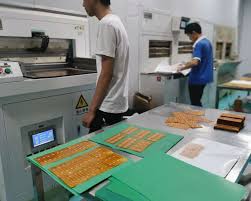
Compared to rigid circuit boards, a flex circuit is more expensive, but it offers greater durability and flexibility. It is also more difficult to design, and requires a higher level of skill and knowledge. There are several steps in the manufacturing process, including the use of a special type of solder. A flex circuit must be pre-heated in a special oven called a reflow oven, where the solder paste melts to achieve a good connection between the traces and the components. After the reflow soldering, the flex circuit will be tested for continuity and shorts.
How Can an Flex PCB Manufacturer Be Used in Robotics and Automation?
When designing a flex circuit, it is important to consider the number of layers and the bend radius. The number of layers can vary from 4 to 8, depending on the requirements of the application. The thickness of the flex circuit should be consistent across the entire surface to prevent stress on the traces when they are bent. It is also advisable to avoid using thicker copper traces as they are more susceptible to cracking when bent.
To make the flex circuits more durable, you should use a thermally-resistant polyimide material. These materials are also known as flex substrates and can withstand a wide range of temperatures. To prevent damage to the flex circuits, you should also keep the area around a bend free of cut-outs and slits. In addition, you should leave a sufficient amount of space between the drill and the copper.
Another way to improve the reliability of a flex circuit is by utilizing a panel plating technique. This method allows manufacturers to better manage copper thickness and increase etch yields in complex etch designs. It is also possible to use a pad-only plating process, where copper is applied only to the pads of the flex circuit. This will allow for the formation of regulated impedance and better signal integrity. In addition, it will reduce insertion forces and lead to longer life in dynamic applications. Finally, you should choose a tin or soft gold coating for the outer layer of the flex circuit.